The India-Middle East-Europe Corridor
The India–Middle East–Europe Economic Corridor (IMEEC or IMEC) was announced in September 2023 during the G20 Summit in New Delhi. India, the United Arab Emirates, Saudi Arabia, France, Italy, Germany, the European Union, and the United States signed a Memorandum of Understanding aimed at fostering economic development through enhanced connectivity and greater integration between Asia, the Arabian Peninsula, and Europe. The initiative marks the beginning of a new era of regional cooperation.
Connected Corridors
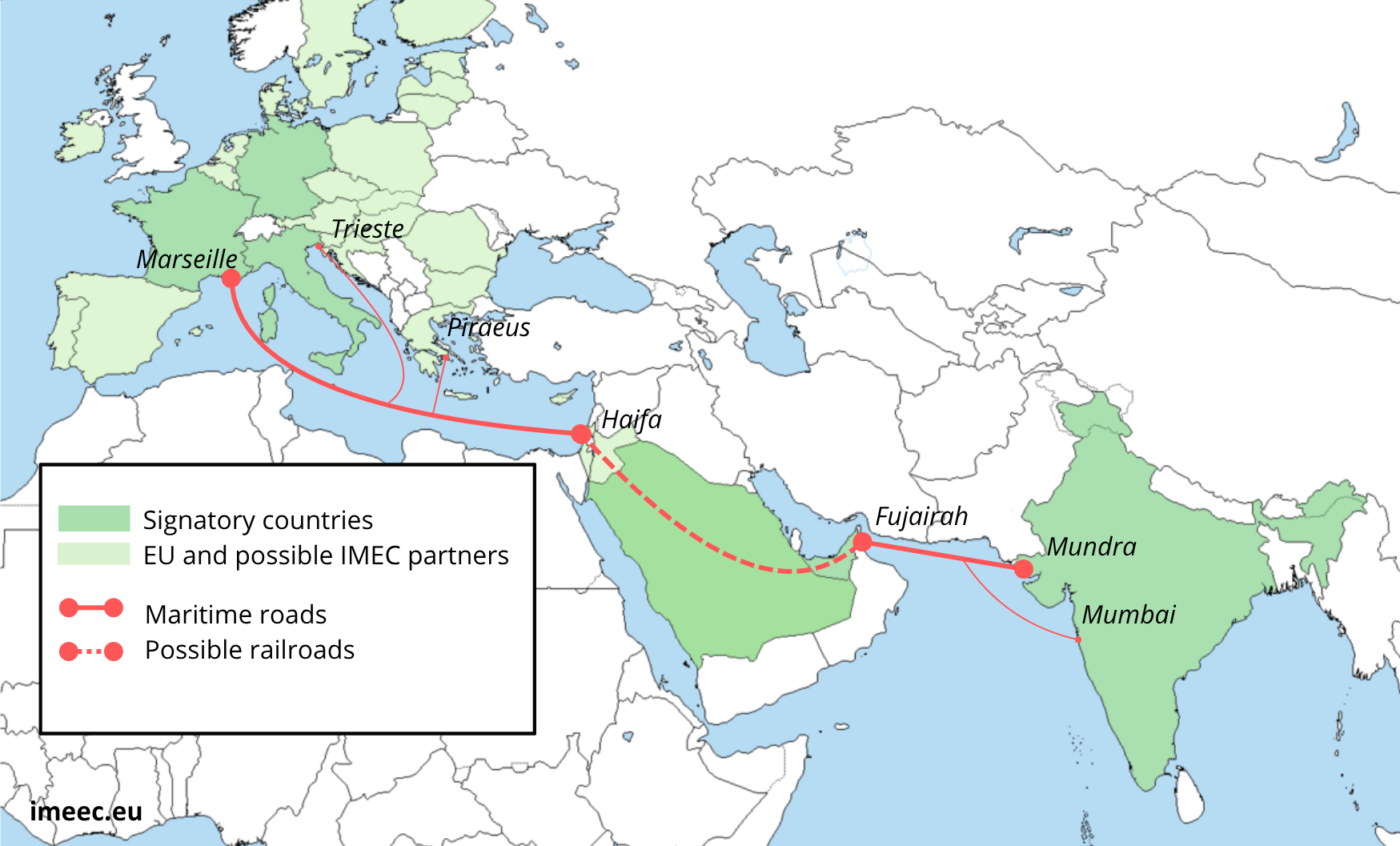
IMEEC was initially conceived as two interconnected corridors. The first links India to the Gulf region, while the second connects the Arabian Peninsula to Europe. The corridor is multimodal, combining maritime routes with railway networks, some sections of which remain under development.
Once completed, IMEEC will provide an alternative – or complementary – route to existing trade and transport corridors.
The corridor will be further strengthened through electrical and digital connections via submarine cables, as well as new pipeline infrastructure designed in particular to facilitate future hydrogen exports.
Beyond physical infrastructure, IMEC requires the establishment of new agreements and regulatory frameworks to deepen economic exchanges among the three regions, support the development of more secure and integrated supply chains, and facilitate cooperation among businesses, governments, and stakeholders. The initiative also has the potential to expand through the inclusion of additional participating countries.
Converging Interests
The development of IMEEC reflects a shared vision of global connectivity and mobility challenges among India, the Middle East, and Europe.
In 2005, India launched its “Look West” policy to strengthen its relations with the Middle East, a region from which it imports a significant share of its energy resources and where a large Indian diaspora resides.
Since Narendra Modi became Prime Minister in 2014, this policy has gained further momentum. India has established new strategic partnerships, notably with the United Arab Emirates through the India–UAE Comprehensive Strategic Partnership, while also deepening its relations with Israel.
In the Middle East, the Abraham Accords, inaugurated through the normalization agreement between Israel and the United Arab Emirates in September 2020, ushered in a new phase of cooperation between Israel and several Arab states. Morocco and Sudan subsequently joined the initiative. Although the momentum behind further normalization efforts has been affected by the Israeli–Palestinian conflict and tensions affecting regional maritime security, the Abraham Accords remain part of a long-term vision of a more peaceful, prosperous, and interconnected Middle East.
For the European Union, as well as for France, Germany, and Italy, IMEEC responds to the strategic need to diversify supply chains while strengthening partnerships with India and the Gulf States. The corridor is also aligned with the European Union’s Indo-Pacific Strategy and the Global Gateway initiative, both of which seek to enhance sustainable connectivity between Europe and the rest of the world.
New Infrastructure for a Greener and More Innovative Future
IMEEC is expected to create new maritime and logistics routes between India, the Middle East, and Europe through the development of efficient infrastructure capable of accommodating growing trade volumes and increasing economic exchanges.
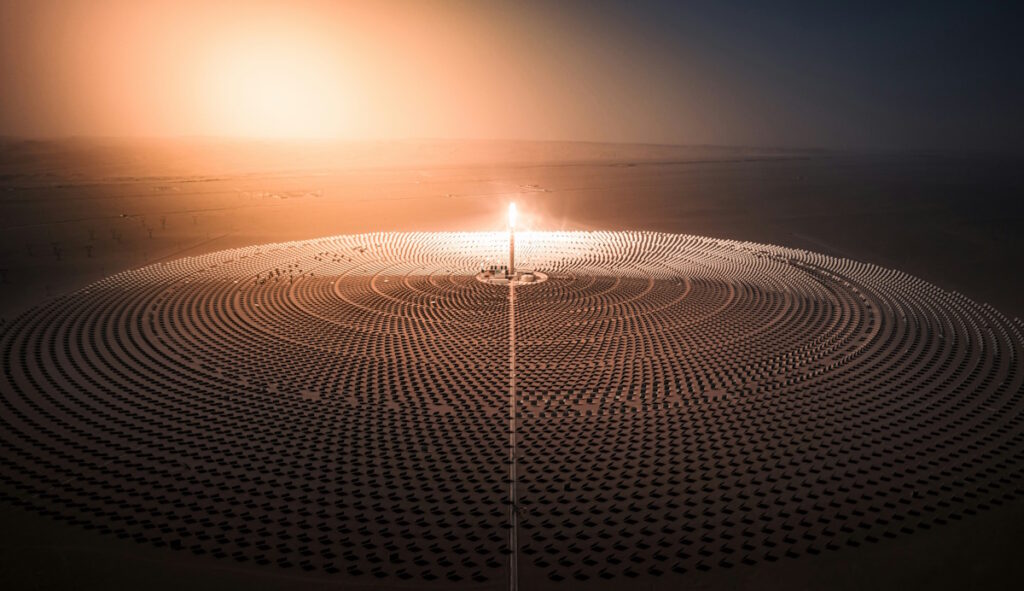
The initiative also seeks to accelerate the decarbonization of participating economies by promoting sustainable alternatives in both energy and transportation. Significant investments are expected in emerging sectors such as hydrogen production, transmission, and distribution, contributing to the transition towards cleaner and more resilient energy systems.
Beyond transport and energy infrastructure, IMEEC is intended to foster deeper cooperation in advanced technologies, digital innovation, and artificial intelligence. These capabilities will play a key role in optimizing supply chains, improving logistics performance, and strengthening the competitiveness of the corridor’s economic hubs.
A Human-Centred dimension
IMEEC is more than a transport corridor. It is a shared strategic project designed to strengthen interactions and exchanges among Europe, the Middle East, and India.
Human, commercial, academic, scientific, and cultural exchanges constitute an essential component of the initiative. By facilitating closer cooperation between societies and institutions, IMEC aims to build long-term partnerships that extend beyond economic connectivity alone.
Regional tensions in the Middle East temporarily slowed the implementation of the project. However, since late 2025, IMEC has gained renewed momentum, particularly following the signature of the EU–India Trade Agreement on 27 January 2026. The European Union, India, and Middle Eastern partners increasingly share a common ambition to contribute to a connected, multipolar world in which their respective interests are better represented and advanced.
One Corridor, Multiple Pathways
While the original IMEC framework identified relatively well-defined segments linking Europe to India through the Middle East, several complementary routes are now being considered to maximize the corridor’s overall potential.
In the Mediterranean region, European countries including France, Italy, and Greece have an important role to play in coordinating infrastructure development and ensuring the effective integration of maritime, rail, energy, and digital networks.
The long-term success of IMEEC will depend not only on the completion of major infrastructure projects but also on the ability of participating countries to develop complementary routes, increase interoperability, and promote seamless connectivity across regions. In this regard, flexibility and cooperation will remain key drivers of the corridor’s future development.

France Stands Alongside Saudi Arabia to Enhance IMEC Security
France’s military cooperation with Saudi Arabia highlights Europe’s increasing role in securing the infrastructure essential to the IMEC.
Europe and the IMEEC
The European Union is a party of the IMEEC. This connectivity initiative can help the EU develop new international ambitions.