by Sebastien Goulard
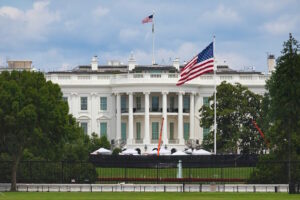
President Donald Trump has renewed his support for the India–Middle East–Europe Economic Corridor (IMEC). During a meeting with the leaders of the Gulf Cooperation Council (GCC), held on the sidelines of the United Nations General Assembly in New York on 22 September, the US President underscored the importance of building IMEC for global connectivity and stated that his administration viewed the corridor as a solution to the problem posed by Iran.
As the South China Morning Post notes, IMEC, launched at the G20 Summit in New Delhi in September 2023, is one of the few initiatives launched under President Biden that Donald Trump continues to support, underscoring the corridor’s strategic importance to the United States.
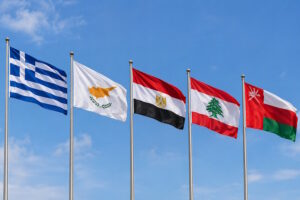
The crisis in the Strait of Hormuz represents both a threat to IMEC and a catalyst, highlighting the importance of a secure corridor linking India, the Middle East and Europe. While the original IMEC project was designed to pass through the Persian Gulf, the corridor’s revised configuration is expected to run instead through the Red Sea. However, this would require securing the Bab el-Mandeb Strait, which is threatened by the Houthis. The new IMEC is therefore likely to take the form of a network rather than a single, fixed route. Washington’s declared support could encourage other countries in the region, such as Egypt and Oman, to join the initiative.
Nevertheless, many questions remain, beyond security concerns, regarding how IMEC will be structured. One key issue is its governance, which has yet to be established. What role will the United States play in coordinating the various projects associated with IMEC?