by Sebastien Goulard
In early November, the OECD published a report examining the IMEC and how its various regions are connected to one another.
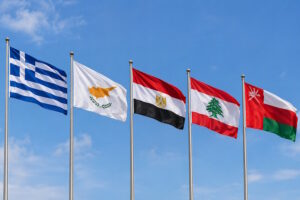
As we have already highlighted on our platform, the IMEC is no longer viewed as a single corridor, but rather as a multimodal network integrating transport, energy and digital connectivity, linking several countries between Europe and India. Geopolitical tensions in the Middle East, particularly the crisis surrounding the Strait of Hormuz, have prompted the search for alternatives to the original corridor. The OECD calls for additional countries to join the IMEC: Oman, Egypt, Lebanon and Syria in the Middle East, as well as Cyprus, Malta and Croatia in Europe. However, for the IMEC to operate effectively, strong coordination among its various stakeholders will be essential.
A Methodology for Assessing Corridor Connectivity
The report proposes a practical approach to measuring IMEC connectivity using a methodology developed by the OECD, based on forty indicators and already applied to the Trans-Caspian Corridor. This methodology examines both infrastructure (hard connectivity) and the policies and measures that facilitate trade (soft connectivity).
Hard connectivity indicators include road quality, the electrification rate of railway lines and the average age of shipping fleets. Examples of soft connectivity indicators include the level of automation of customs procedures, the rate of cross-border electronic customs clearance and the number of bilateral trade agreements concluded by each country.
Key Findings
According to the OECD report, maritime trade represents a strong component of the corridor, supported by hubs with significant capacity. However, the authors point out that these trade flows remain exposed to external threats and therefore call for greater route diversification.
Rail transport, particularly in the Middle East, is identified as a major area requiring improvement. The authors call for investment in this sector, coordinated at the regional level. One persistent bottleneck is the railway gauge in Jordan, which is incompatible with the Saudi and Israeli rail networks. Jordan could therefore represent a key area for improvement. The report’s authors also highlight that ports in the Middle East could be better connected to the railway network. As a result, road transport currently appears to be the most suitable means of ensuring connectivity across the Middle East.
Most of the countries participating in the IMEC have robust trade facilitation systems in place. Nevertheless, these could be further strengthened, particularly through the development of new logistics platforms. While process digitalisation is already at an advanced stage across the corridor, further efforts are needed to improve interoperability between these systems. The authors also note that cooperation between national agencies remains limited.
Finally, although one of the IMEC’s objectives is to support the production and transportation of green hydrogen, this ambition remains largely at the planning stage due to the numerous technical constraints on the ground.
The report’s authors call for the development of a roadmap to strengthen the IMEC over the medium and long term, with clearly defined and measurable objectives.
This first report highlights the considerable potential of the IMEC while identifying areas for improvement that will need to be addressed if the corridor is to become a structural component of global trade.
Finally, it is worth noting that the report includes a foreword by OECD Secretary-General Mathias Cormann, as well as by France’s Special Envoy for the IMEC. France is, of course, a strong supporter of the initiative and is seeking to ensure its development despite the challenging geopolitical context.
The OECD report highlights the IMEC’s significant potential as a multimodal trade corridor while identifying key infrastructure, connectivity and coordination challenges that must be addressed to ensure its long-term development and effectiveness.